
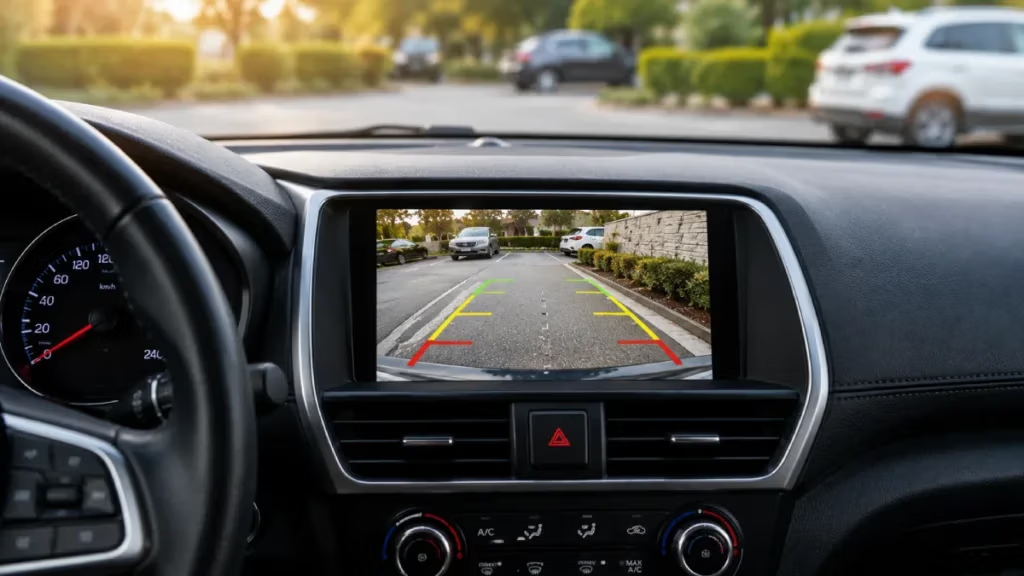
Reversing can be challenging, especially in busy car parks, narrow driveways, or areas with limited visibility. Even when using mirrors, some objects and obstacles may remain outside your direct line of sight.
A reverse camera provides a live view of the area behind your vehicle when you select reverse gear. This added visibility can make parking easier and help you manoeuvre with greater confidence.
Here are five important benefits of installing a reverse camera.
Rear-view mirrors are useful, but they cannot show everything behind your vehicle. A reverse camera provides a wider view of the area directly behind the car.
This can help you see:
The camera image is displayed on a compatible head unit, dashboard screen, or rear-view mirror display.
Parking in tight spaces can be difficult, particularly when visibility is limited. Many reverse camera systems include parking guidelines that appear on the display.
These guidelines can help you understand:
A reverse camera can be especially useful when parallel parking, reversing into a parking space, or manoeuvring in busy areas.
Every vehicle has areas that may not be fully visible through the mirrors. These blind spots can make reversing more difficult.
A rear-view camera can provide an additional viewing angle and help improve awareness of the space behind the vehicle. It should be used together with mirrors and normal visual checks rather than as a replacement for them.
Using multiple sources of information can help drivers make more informed decisions while reversing.
A reverse camera is not only useful in difficult parking situations. It can also make everyday driving more convenient.
You may find it helpful when:
Once you become familiar with using a reverse camera, it can become a valuable part of your daily driving routine.
Modern reverse cameras are available with a range of useful features, including:
The right camera system depends on your vehicle, display system, and installation requirements.
Before selecting a reverse camera, consider the following:
Some cameras are mounted near the number plate, while others may be integrated into a handle, trim piece, or vehicle-specific housing.
Check whether the camera will work with your existing head unit or screen. Some systems may require an adapter or additional interface.
A clear image can make it easier to identify objects and parking lines. Look for a camera that provides reliable visibility in different lighting conditions.
Correct installation is important for camera positioning, wiring, and reliable operation. A professional installer can help route cables safely and position the camera for the best possible view.
A reverse camera is a practical upgrade that can improve visibility, simplify parking, and make reversing more convenient. Whether you drive a small car, family vehicle, SUV, van, or work vehicle, a properly installed camera system can provide useful support during everyday manoeuvres.
For the best results, choose a camera that is compatible with your vehicle and display system, and have it professionally installed.